
Short answer: you don’t need a systems integrator, a data migration plan, or a Q3 kickoff meeting to start preparing for the EU’s Digital Product Passport requirements. With Portia, you sign up, upload your first product, and have a live, scannable DPP within minutes. No implementation phase, no onboarding call required, no IT ticket.
That answer is the whole point of this post. Here’s why most teams don’t believe it yet, and what actually happens when you try it.
Why DPP Projects Turn Into IT Projects in the First Place
Ask most compliance or sustainability leads at a fashion or footwear brand what a Digital Product Passport rollout looks like, and you’ll hear some version of the same story: a vendor selection process, a systems integration phase to connect the DPP tool to the PLM system, a data mapping exercise between BOM formats, a pilot with one collection, then a slow expansion once IT signs off on the integration.
That process makes sense for legacy PLM and compliance platforms, because they were built as enterprise software first and DPP tools second. They assume you already have clean, structured product data sitting in a system that needs a connector built to it. The DPP feature gets bolted onto infrastructure that was never designed for it, so every implementation becomes a systems project before it’s a compliance project.
None of that is actually required by the regulation. The ESPR doesn’t care how your data got into a passport, only that the passport exists, is accurate, and is accessible via a persistent identifier like a QR code. A brand with 200 SKUs and a shared spreadsheet has the same compliance obligation as a brand with a six-figure PLM system, and arguably an easier path to meeting it.
What Actually Happens When You Start With Portia
Portia was built as a DPP platform from day one, not retrofitted onto an existing PLM. That’s the difference that removes the implementation phase entirely.
Here’s the real sequence, timed the way it actually happens:
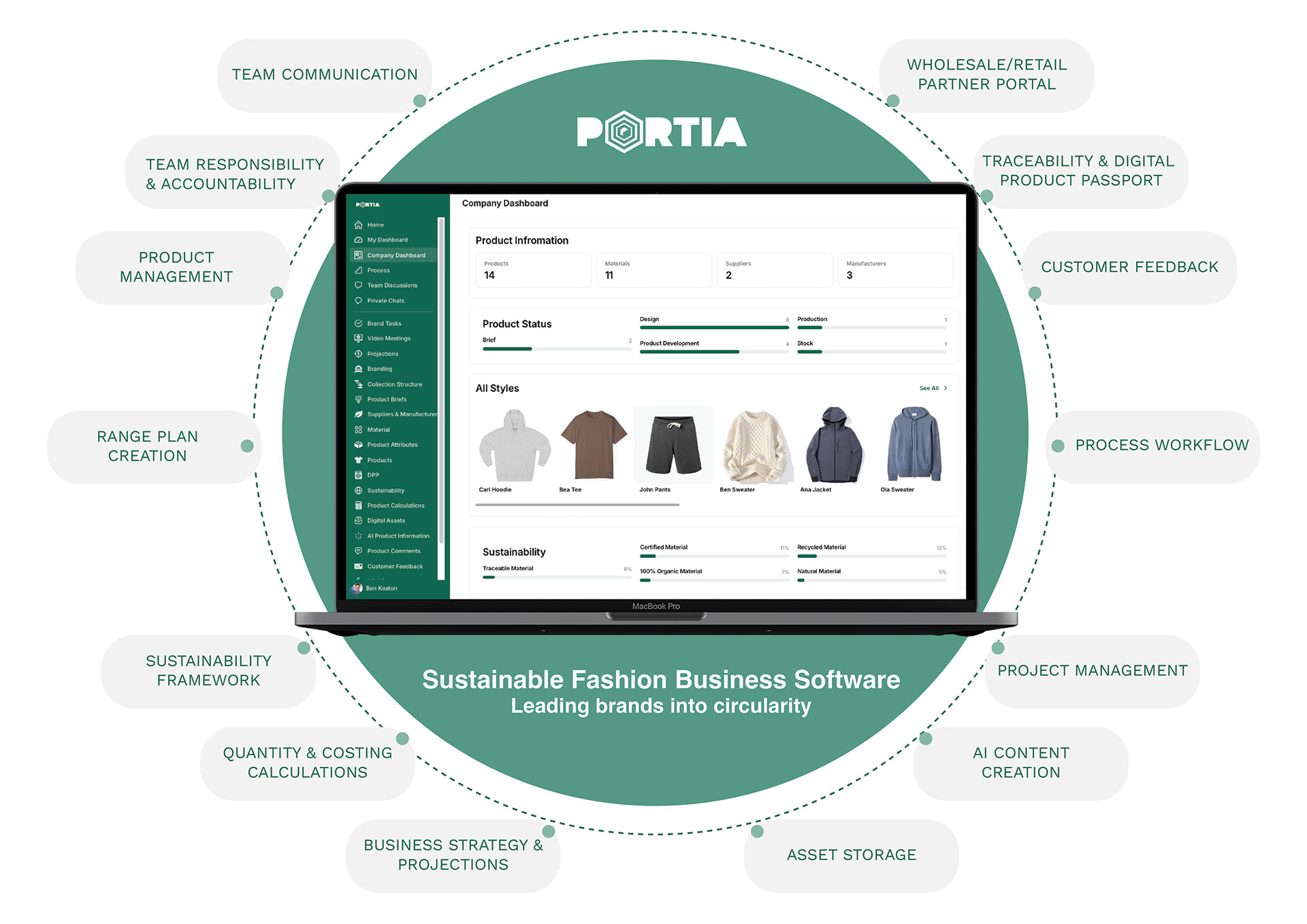
Step one: you sign up and land in your brand portal. You don’t need any implementation project och customization to get started. Everything is set up and ready to use.
Step two: you create your first product. You can type it in manually, or upload the product data via a sheet file and let Portia’s AI-powered matching handle all the mapping so that materials, supplier, etc end up in the right place.
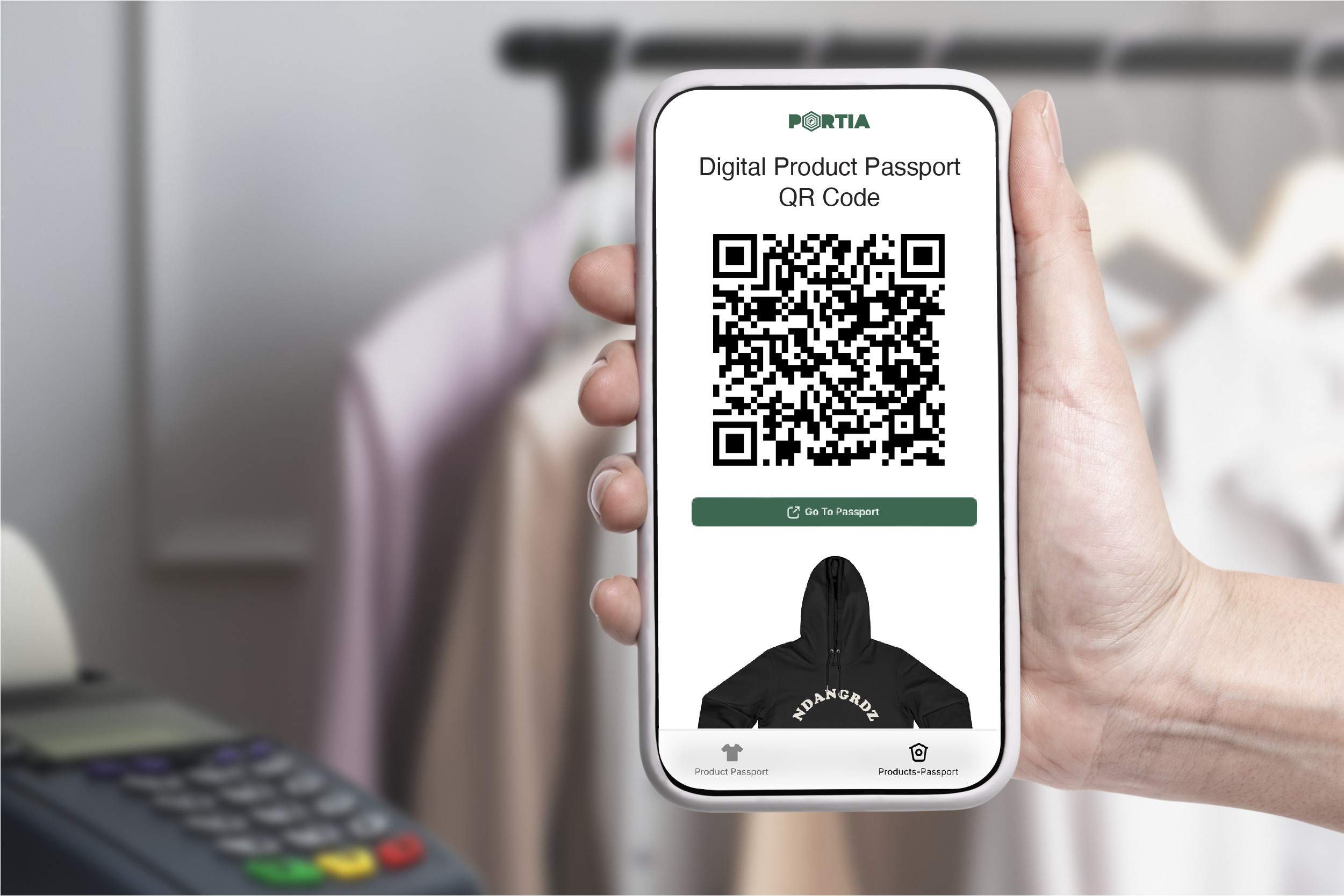
Step three: you click publish, and that product has a live Digital Product Passport, hosted on a public URL with a QR code attached, ready to print on a hangtag or care label. It already carries the ESPR-relevant fields, and if you’re managing packaging too, PPWR data sits right alongside it as part of the same product record rather than a separate module you have to configure.
There is no “go-live” milestone, because you’re live from the first product. You scale up by adding products and inviting your team, not by graduating through implementation phases.
Why This Works Without an Integration Phase
The reason this is possible isn’t a shortcut, it’s a design decision. Portia treats a product as the core object, and everything else (materials, suppliers, compliance documents, packaging) attaches to that product directly, rather than living in separate systems that need to be synced.
That means:
You don’t need to migrate historical data before you start. You add products as you go, starting with your current or upcoming collection. Older SKUs can be backfilled whenever it makes sense for your team, not as a prerequisite.
You don’t need IT resourcing to connect systems. There’s no API integration required to get your first passport live. If you later want to pull data from an existing system, that’s an addition, not a dependency.
You don’t need a pilot collection to prove the concept before rolling out further. Because the cost of adding a product is a few minutes, not a project, you can treat your entire current collection as the pilot and expand from there without a formal phase gate.
Your team can use it immediately, not after training. The brand portal is built for the people who already own product data, whether that’s a product developer, a compliance lead, or a sustainability manager, not for a dedicated systems administrator.
What This Means for Your Compliance Timeline
The textile and apparel delegated act under ESPR is indicated for adoption in Q4 2027. With a transition period of at least 18 months, DPPs are expected to become mandatory in mid-to-late 2029 at the earliest (an estimate; see our ESPR Textile DPP Tracker). That sounds far off, but if your compliance approach depends on a systems integration project, that timeline disappears fast once you factor in vendor selection, data cleanup, integration build, and testing.
Starting now with a platform that requires none of that removes the timeline pressure entirely. You’re not racing to finish an IT project before a deadline; you’re already preparing, product by product, well before the deadline exists. And because Portia’s DPPs double as a brand engagement channel, with Spotlights for brand storytelling and Broadcasts to reach customers who’ve saved a product, the same five minutes that gets your first passport live also gets you a new consumer touchpoint.
Frequently Asked Questions
Do I need to integrate Portia with my PLM system to get started?
No. You can create products directly in Portia and start publishing passports immediately. Integration with an existing PLM or ERP system is something you can add later if it’s useful, not a requirement to go live. Also, you can export data into a sheet from your existing PLM and upload it to Portia.
How long does it take to get a single product’s DPP live?
A few minutes, from account creation to a published, scannable passport. There’s no separate onboarding or provisioning step.
Do I need clean, structured product data before I start?
No. You can enter products manually or upload a materials CSV, and Portia’s matching handles variation in naming so you don’t have to standardize your data first.
Does this cover both ESPR and PPWR requirements?
Portia keeps product-level DPP data and packaging-level PPWR data in the same product record, so you’re not managing two separate systems for two overlapping regulations.
Is there a minimum collection size or a required pilot phase?
No. You can start with one product or your full current collection. There’s no phased rollout requirement built into the platform.
Portia has been helping fashion, footwear, and home textile brands manage Digital Product Passports since late 2024. If you want to see what your first passport looks like, you can create one in the time it takes to read this post.