Short answer: Digital Product Passport (DPP) software comes in five types: marketing-led, traceability-led, LCA-led, layered (orchestration) and PLM-native. They differ mainly in where the passport data comes from. Small fashion brands without a large IT stack are usually best served by a tool that captures product, material and supplier data where the product is developed, then adds specialist tools only where they need them.
Last updated: 19 October 2026.
What is DPP software?
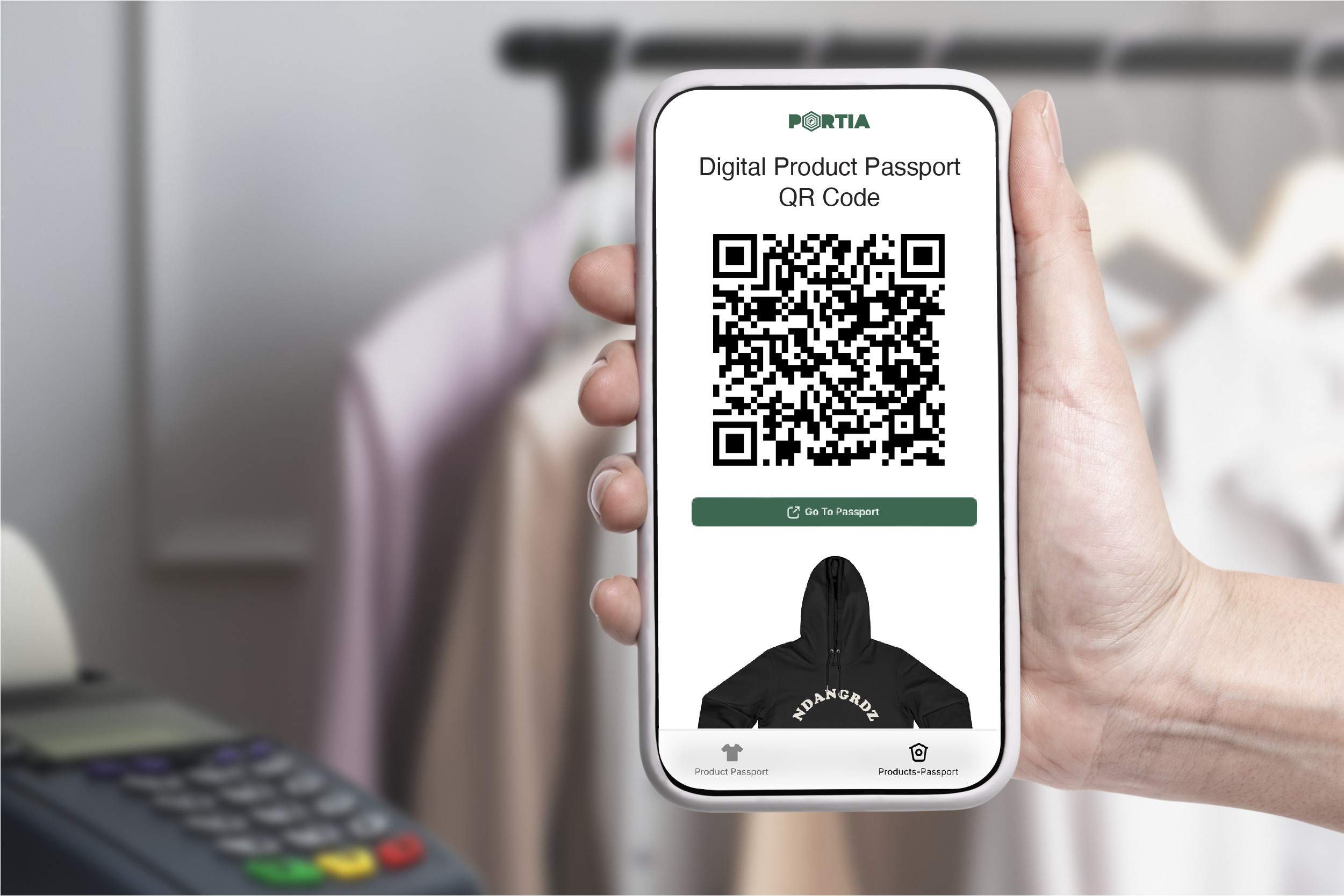
DPP software is a tool that collects product data, turns it into a Digital Product Passport and publishes it behind a data carrier such as a QR code. Under the EU Ecodesign Regulation, a DPP is “a set of data specific to a product” that is “accessible via electronic means through a data carrier” (Regulation (EU) 2024/1781, Article 2).
Every DPP tool does some version of three jobs:
- Collect the data: materials, composition, suppliers, origin, certificates, care and repair information.
- Structure it so that it can be checked, updated and reused.
- Publish it as a passport page that customers, recyclers and authorities can reach by scanning the product.
The types below differ in which of these jobs they were originally built for. That starting point matters more than the look of the passport page, because the textile rules will be about data, not design.
Why do DPP tools differ so much?
The rules for clothing are not final, so vendors have built from very different starting points. The European Commission plans to adopt the textile delegated act in Q4 2027 (European Commission). Under the ESPR it can apply no earlier than 18 months after entering into force (Article 4(4)). We track every date in our ESPR Textile DPP Tracker.
Until then, vendors have built from what they already did well: brand storytelling, supply chain mapping, environmental footprints, enterprise data integration or product development. Two published buyer guides already sort the market this way. Carbonfact’s buyer comparison (updated 30 March 2026) uses four categories: marketing-led, traceability-led, LCA-led and layered. ENVRT describes three layers (traceability, LCA and rendering) and groups vendors by which layers they build themselves.
Both frameworks are useful, but neither has a category for the place where most product data is first created: product development. That is the fifth type.
Type 1: What is marketing-led (rendering-led) DPP software?
Marketing-led DPP software is built around the consumer-facing passport page. It focuses on design, storytelling, scan analytics and post-purchase experiences such as resale, repair or authentication. Lightweight self-serve passport generators and e-commerce plug-ins also usually sit here.
- Strengths: fast to launch, polished pages, strong for brand communication.
- Trade-offs: the data usually comes from somewhere else, often entered by hand or imported. Carbonfact notes these tools can “struggle to scale as data requirements increase”.
- How the guides classify vendors: Carbonfact uses Tappr as its example. ENVRT groups EON, Arianee, Avery Dennison and Tappr as marketing- or rendering-led.
- Best for: brands whose first goal is customer engagement and that already have clean product data.
Type 2: What is traceability-led DPP software?
Traceability-led DPP software grew out of supply chain mapping, supplier onboarding and due diligence. It is built to collect supplier data, certificates and chain-of-custody records across tiers.
- Strengths: deep supplier networks, risk and due diligence workflows, product journey visibility.
- Trade-offs: environmental data is often handled by a partner, and the passport can feel like an add-on to a supply chain tool.
- How the guides classify vendors: ENVRT lists Retraced and TrusTrace as traceability-led, and Fairly Made as a hybrid with native LCA. Carbonfact uses Fairly Made as its example.
- Best for: brands with complex, multi-tier supply chains and a sourcing or compliance team to run supplier programmes.
Type 3: What is LCA-led DPP software?
LCA-led DPP software is built around life cycle assessment: calculating the environmental footprint of each product and reusing that data for the passport, sustainability reporting and eco-design.
- Strengths: product-level environmental data with a documented methodology.
- Trade-offs: for Carbonfact, ENVRT notes that chain-of-custody traceability “is not a core part of the platform”, so brands typically run a traceability tool alongside.
- How the guides classify vendors: both guides use Carbonfact as the example.
- Best for: brands whose main priority is environmental measurement and reporting.
Type 4: What is layered (orchestration) DPP software?
Layered DPP software is an aggregation layer. It pulls data from existing PLM, ERP, PIM, traceability and LCA systems, then governs and publishes the passports.
- Strengths: consolidation across many systems, regions and brands; access control and governance.
- Trade-offs: it depends on the quality of upstream data and usually takes more integration work. Carbonfact describes these systems as “most relevant for large, multi-brand organizations”.
- How the guides classify vendors: Carbonfact uses EON as its example. ENVRT calls Renoon an infrastructure or orchestration platform.
- Best for: enterprises that already run several specialised data platforms.
Type 5: What is PLM-native DPP software?
PLM-native DPP software creates the passport inside the system where the product is developed. Styles, bills of materials, materials, suppliers and certificates are entered once during development, and the passport is assembled from that same data instead of being collected again at the end of the season.
- Strengths: one source of truth for product data, little duplicate entry, and passport data that improves as part of normal product work. It works without an existing PLM, which suits brands still running on spreadsheets.
- Trade-offs: specialist depth may sit with partners. For example, a PLM-native tool may import environmental data rather than calculate it.
- Best for: small and medium brands that need product development tooling anyway and want the passport as a by-product of it.
This category is missing from the two published frameworks above. It is also where Portia sits, so read the next sections with that in mind.
How do the 5 types compare?
| Type | Built around | Where passport data comes from | Typical buyer | Main trade-off |
|---|---|---|---|---|
| Marketing-led | Consumer passport page | Imported or entered by hand | Brands focused on engagement | Data depth |
| Traceability-led | Supplier mapping | Supplier programmes | Brands with complex supply chains | LCA often via partners |
| LCA-led | Environmental footprint | LCA models and supplier inputs | Brands focused on impact reporting | Traceability often separate |
| Layered | Data integration | Other systems (PLM, ERP, PIM, traceability, LCA) | Large, multi-brand groups | Integration effort |
| PLM-native | Product development | Data entered while developing the product | SMEs replacing spreadsheets or adding a PLM | Specialist depth via partners |
What does the regulation expect from any DPP software?
Whichever type you choose, the ESPR already sets essential requirements that every passport will have to meet once a delegated act applies. Use them as buyer questions:
- Persistent identifier and data carrier. The passport must be connected through a data carrier to “a persistent unique product identifier” (Article 10(1)(a)). Ask how identifiers are created and kept stable.
- Open, interoperable data. Passport data must be based on open standards and transferable “without vendor lock-in” (Article 10(1)(d)). Ask how you get your data out.
- Back-up and long-term availability. A back-up copy must be kept with a DPP service provider (Article 10(4)), and the passport must remain available even after the company that created it ceases trading (Article 11(e)).
- Model, batch or item level. The delegated act will decide which level applies (Article 9(2)(d)). The JRC textile study proposes mostly model-level data, batch level where variability is material, and voluntary item-level identifiers. Ask whether the tool supports all three.
- Registration. Passports must be registered in the EU DPP Registry, which went live on 20 July 2026.
One caution: the rules for DPP service providers are themselves still to come. The Commission lists a delegated act on service providers for 2027 (DPP timeline). Be careful with any vendor that claims its passports already meet textile requirements, because those requirements have not been published.
Which type fits a small fashion brand?
Start from where your product data lives today, not from the passport page you would like to show. Four questions settle most cases:
- Do you already have a PLM? If yes, either add a passport tool that can take data from it, or check whether your PLM can publish passports itself. If you run on spreadsheets, a PLM-native tool solves two problems at once.
- How deep is your supply chain programme? If you need multi-tier mapping, due diligence and supplier risk scoring, a traceability-led tool is the specialist. If you mainly work with tier-1 factories, a lighter supplier workflow is usually enough.
- Is environmental measurement your main goal? If you need product-level LCA, use an LCA-led tool or an LCA partner, and make sure the results can be imported into your passport.
- How many systems does your team actually use? Layered platforms pay off when you have many systems to connect. With a small team, every extra tool is another login, another subscription and another integration to maintain.
For most brands with fewer than a few hundred styles a season and a small product team, the practical order is: get product and supplier data into one structured place, publish passports from that data, and add specialist tools only for the gaps you actually have.
Where does Portia fit?
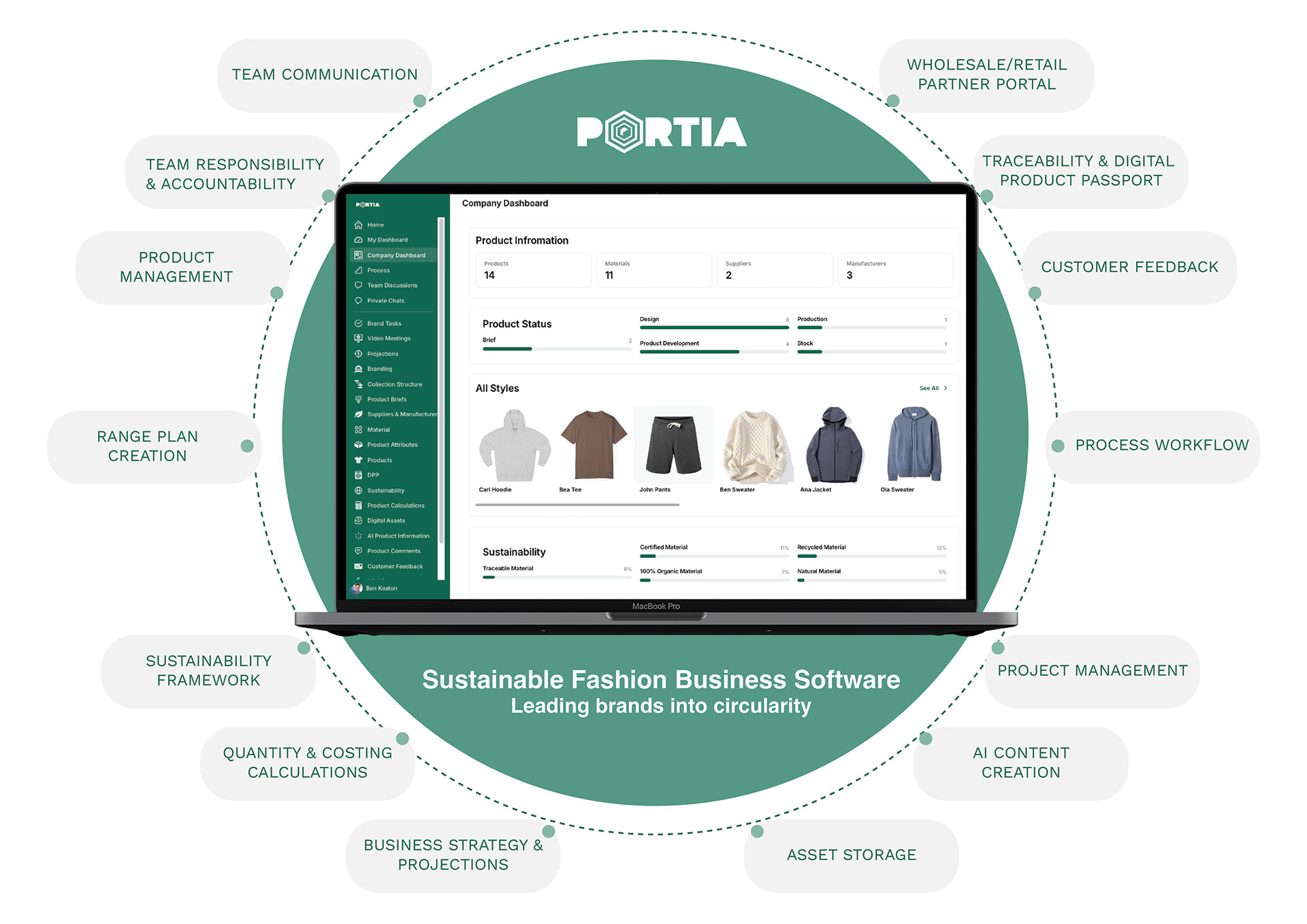
Portia is fashion PLM and Digital Product Passport software built for small and medium product brands, in the PLM-native category described above. What that means in practice:
- Use it as your PLM, or alongside the one you have. Brands can run product development in Portia (products, materials, suppliers, certifications, range planning and a built-in costing sheet), or import data from an existing PLM or ERP.
- Tier-1 supplier logins. Tier-1 suppliers can log in to enter their data and upload certificates.
- You choose the passport level. The brand decides whether passports are created per model or style, per batch or per individual item, and each passport is reached through a QR code.
- Fast first passport. With your product data in a CSV and images ready, your first passport can be live in minutes.
- Shopify. Portia pushes passport data to your Shopify store (how the Shopify connection works). Custom integrations are available on request.
- Languages. Passports are available in English, Swedish, German and Dutch, with more languages coming.
- Data and hosting. Your data is hosted in the EU (Ireland) on infrastructure certified to SOC 2 Type 2 and ISO 27001, and you can export your data whenever you want.
- Environmental data. Impact data is imported from partners or uploaded. Portia does not calculate LCAs itself.
When is Portia not the right fit? If your priority is multi-tier supplier risk programmes, in-house LCA calculation, NFC authentication or orchestrating many enterprise systems, a traceability-led, LCA-led, marketing-led or layered specialist will serve you better, possibly alongside Portia. See what’s inside Portia for the full feature overview.
Swedish brands can read a Swedish overview of what applies and when in Digitalt produktpass för kläder.
Frequently asked questions
What are the types of DPP software?
There are five main types: marketing-led, traceability-led, LCA-led, layered (orchestration) and PLM-native. They differ in where the passport data comes from and which job the tool was originally built for.
What is the best DPP software for a small fashion brand?
There is no single best tool. Small brands without a PLM are usually best served by PLM-native software that captures product and supplier data during development, with specialist traceability or LCA tools added only where needed.
Do I need a separate DPP tool if I already have a PLM?
Not necessarily. Some PLMs can publish passports, and others need a passport layer that takes data from the PLM. Check how identifiers, data export and long-term availability are handled either way.
Does any DPP software already meet the textile DPP rules?
No tool can show that it meets the textile DPP requirements yet, because the textile delegated act has not been adopted. The Commission plans adoption in Q4 2027.
What is a PLM-native DPP?
A PLM-native DPP is a passport created from the product data entered during product development, such as the bill of materials, materials, suppliers and certificates. You don’t collect that data a second time in a separate tool.
See a passport built from your own product data
Book a short demo and we’ll show you how a passport is assembled from product, material and supplier data in Portia.